Wed 18 Nov 2026 • Mantas Zvinas
Same Trip, Different Logo

SHARE THIS POST
Somebody built your trip. It might not be the company you paid.
The 20-second version
- A lot of group trips are built by a local company, then sold under a bigger brand's logo.
- It's called white labeling. Totally legal. Just never mentioned in the ad.
- Car dealers, designer sunglasses, tequila and supplements all run the same play.
- The companies I respect build the whole thing themselves. It's slower. It's also real.
- That's how we run SYB. Before you book anyone (us included), ask the 5 questions near the bottom.
I've been running group trips since 2014.
The longer I do this, the more one thing about this industry bugs me.
A lot of the trips in your feed weren't built by the company selling them.
Some local company you've never heard of built the whole thing.
Then somebody slapped a logo on it.
Fair warning: a few big travel brands probably won't love this one.
White labeling, in plain English
One company makes the product.
Another company buys it finished, puts its own name on it and marks it up.
The maker stays invisible.
The logo gets the credit, the customer and most of the money.
And nobody runs an ad that says "we didn't make this."
You already buy white label stuff
Supplements. A lot of new wellness brands buy a formula a factory already makes and stick their label on it. Some apps will even make and ship every order for you. You never touch a bottle.
The FDA doesn't approve supplements before they're sold. So the gap between a stock formula and the hot new brand on your feed is kind of just a label and a few influencers.
Sunglasses. That designer pair on your face? If it says Prada, Chanel, Armani, Burberry or Versace, it was made by EssilorLuxottica, the same company that owns Ray-Ban and Oakley. Different logos. Same eyewear giant.
Tequila. Flip the bottle and find the four-digit NOM number. It tells you which distillery actually made it. Most tequila comes from shared distilleries, and one of them, Casa Maestri, makes more than 128 brands.
Peptides. Same deal. There are companies that hand a clinic a whole peptide program, ready to sell under the clinic's own name.
Amazon. Third-party sellers moved 61 percent of the paid units on Amazon in early 2025. Plenty of that is private label: somebody else's factory, fresh logo.
A company called Thrasio raised about $3.4 billion just to buy up Amazon brands. It went bankrupt in 2024.
Buying logos isn't the same as building anything.
Car dealers are the OGs
Car dealers are the original middleman. And honestly? They're really good at it.
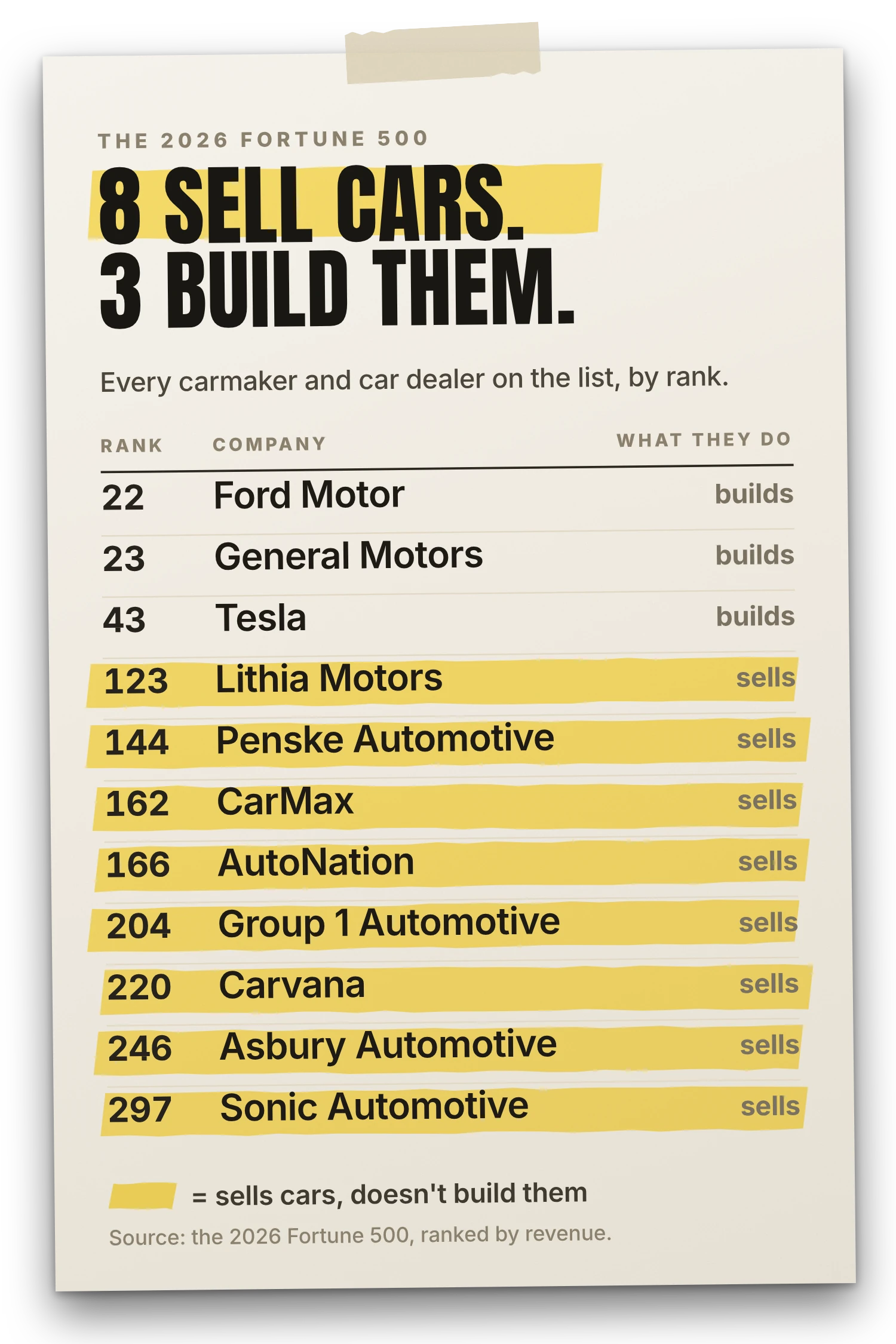
There are more car dealers on the 2026 Fortune 500 than carmakers.
Eight dealers: Lithia, Penske, CarMax, AutoNation, Group 1, Carvana, Asbury and Sonic.
Three carmakers: Ford, GM and Tesla.
None of those eight has ever built a car.
AutoNation made $649 million in profit last year.
Ford, which actually builds cars, lost $8.2 billion. Mostly from writing off its electric vehicle bets.
The maker takes the risk. The factories, the recalls, the bets that flop.
The dealer keeps the easy money. New car margins run around 5 percent. Service can hit 50.
You know the sign. Some guy's last name, then Ford.
He didn't build it. He sells it.
An economist named George Akerlof shared a Nobel Prize for showing what happens when the seller knows more than the buyer. His example? Used cars.
Whoever holds the information wins.
Then Tesla showed up and skipped the dealer completely. It designs the car, builds it and sells it to you.
Dealers took Tesla to court. 28 states still ban or restrict carmakers selling straight to you.
Now look at travel
Travel works the exact same way.
Every destination has local companies that do the ground work. The industry calls them DMCs, short for destination management companies.
They book the hotels. Hire the guides. Run the vans. Plan the days.
Plenty of big travel brands buy that finished trip at a wholesale price, add their markup and sell it as their own.
And nobody in the industry even hides it. The Travel Corporation, the group behind Trafalgar and Insight Vacations, has a whole blog post walking travel companies through white label trips. My favorite line:
"All the vehicles, uniforms and marketing materials will be stamped with your logo."
The Travel Corporation, on white label trips
There's even trip software for local operators that puts the travel brand's logo on every itinerary and keeps the local company's name off it.
Try this. Look up group trips to the Amalfi Coast from a few of the big brands.
The itineraries are close to the same. Maybe tweaked a little.
A lot of the time, the same local operator is running the ground for more than one of them.
Same trip. Different logo. Different price.
So what does building it yourself actually look like?
That free sample trip has a name, by the way. The industry calls it a fam trip: the local company pays for it so the brand can see the product before selling it.
It's a nice week. It's not a relationship.
When we run Amalfi, the hotel owner is our friend Alessandro.
He loves our groups, our leaders and the whole vibe. He parties with us. He's even come to visit us in other countries.
The restaurants are family run. We've been going long enough that the kids we met are now the ones running the place.
It's beautiful to watch. We kind of grew up together.
Our drivers are friends too. They pick us up, they show up when there's an emergency, and sometimes they stay after for a drink on the beach with us.
That's small business to small business. People to people.
The complete opposite of a big corporation.
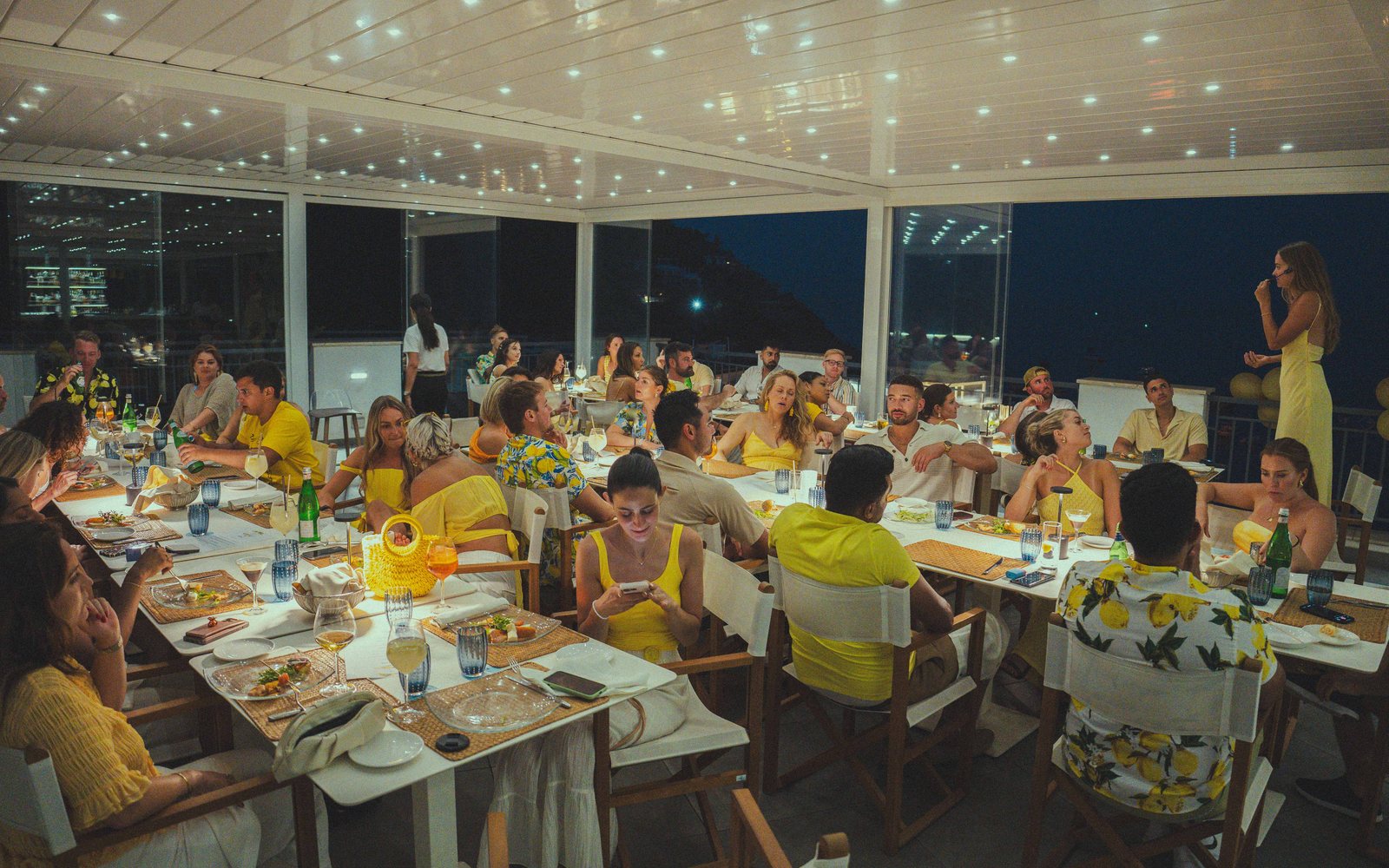
Theme night on our Amalfi trip. Yes, everybody got the memo.
And your tribe attracts your tribe.
Build a trip like a product and you attract people shopping for a product.
Build it on real relationships and you attract real people.
How a middleman outranked us with our own photos
Some middlemen don't even pretend to run anything.
We listed with Tripaneer one time. They're the company behind BookSurfCamps and BookYogaRetreats.
The fine print let them use our logo and our photos.
So they built pages around our name, with our own pictures, and ranked them above our own website.
People looking for us found a middleman first.
That's the only thing they really sell: marketing.
They don't build anything. They take what someone else built and stand in the middle.
And the money? On those sites, your deposit went to the middleman, not the camp. They held it until you showed up, then passed it on minus their cut.
This fall a Dutch court gave Tripaneer a suspension of payments. Days later it was declared bankrupt.
For trips that hadn't happened yet, the camps probably never saw that money. Some guests may get asked to pay again.
Honestly? I don't think many people in this industry were surprised.
People are smarter now. Nobody wants a middleman sitting on their deposit.
The next middlemen will be smarter about it. You probably won't see one fall apart like that again.
But the game is the same. Build a brand, not a trip.
With AI, a slick brand takes a weekend. A real trip takes years.
The companies I actually respect
These are the ones that build the whole thing themselves.
I respect them because there's nowhere to hide.
When you build it, every problem is yours. So you fix it.
A middleman can't fix much. When something breaks, the best it can do is find a new supplier.
Tesla. Sells its own cars, no haggling. Built its own chargers instead of waiting around, and now Ford, GM, Honda and Mercedes use its plug.
SpaceX. Builds its own rockets, down to the engines. Then it lands them and flies them again. One booster has flown 37 times.
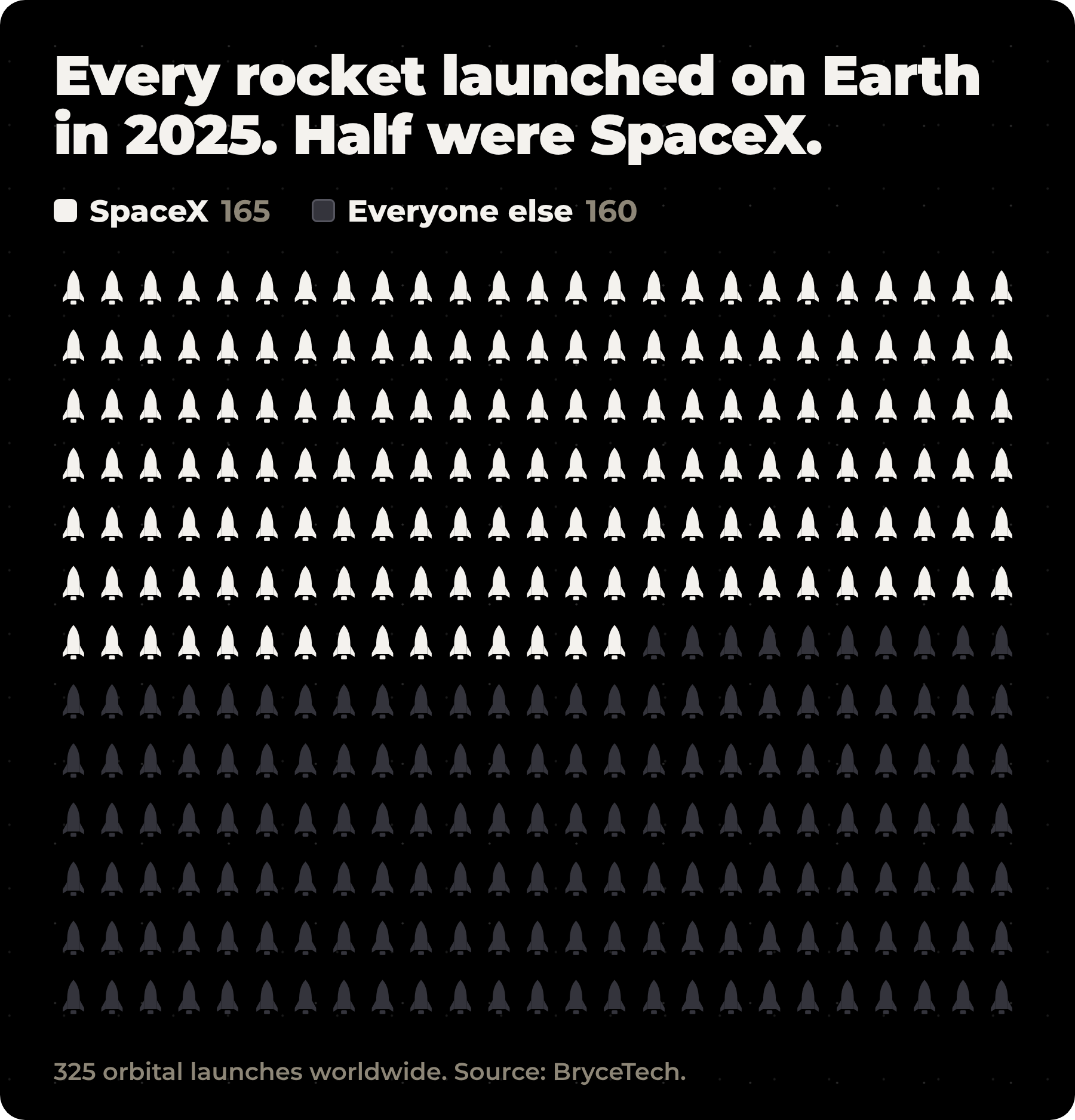
Of SpaceX's 165 launches last year, only eight used a brand new booster. And those 165 were about half of every rocket launch on Earth.
BYD. Makes its own batteries and chips, owns lithium mines and ships cars on its own boats. Last year it sold 2.25 million electric cars to Tesla's 1.64 million.
In-N-Out. Makes its own patties, delivers them on its own trucks and owns every restaurant. It took 77 years to open east of Texas. People still line up around the block.
Hermes. Opened its own school to train its own leather artisans. It keeps 41 percent of its sales as operating profit, and its chairman credits "strong vertical integration."
None of them took the easy road.
That's how you build something people love. And something nobody can copy with a sticker.
Why we do it the slow way
SYB started with people from my SoulCycle class in New York who didn't want the hangouts to end.
We went to Costa Rica. Everybody said we had to do it again.
No investors. Nobody showed us how travel was "supposed" to work.
So we built every trip the way we thought it should be done. We still do.
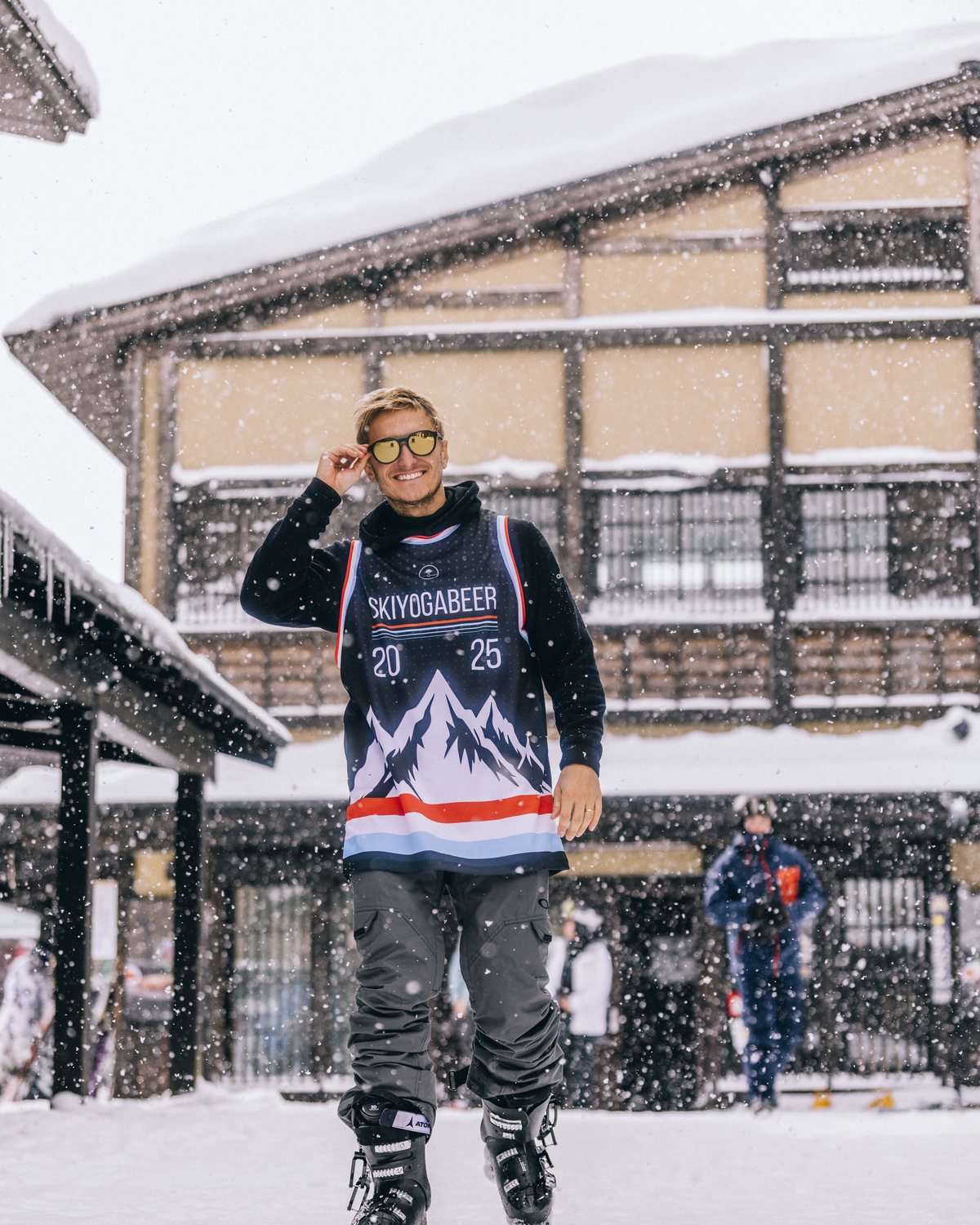
Me on the ground in Japan.
Before we sell a trip, we go scout it ourselves.
We design the days. We pick every place we sleep and every partner we work with.
In Nicaragua we pay for the villas whether a week fills or not.
When it's your trip, the risk is yours too.
And the people running your week are ours.
Most of our leaders came on a trip as a guest first.
Every one of them graduates from our Leadership Academy before they lead you.
The manual is pretty thick at this point. 12 years of leaders adding to it.
But you can't teach personality. So that's the first cut.
Is it slower? Way slower.
If we bought trips off a shelf and slapped our logo on them, we'd have a lot more dates on the calendar.
But there's a reason people have tattooed our logo on their bodies.
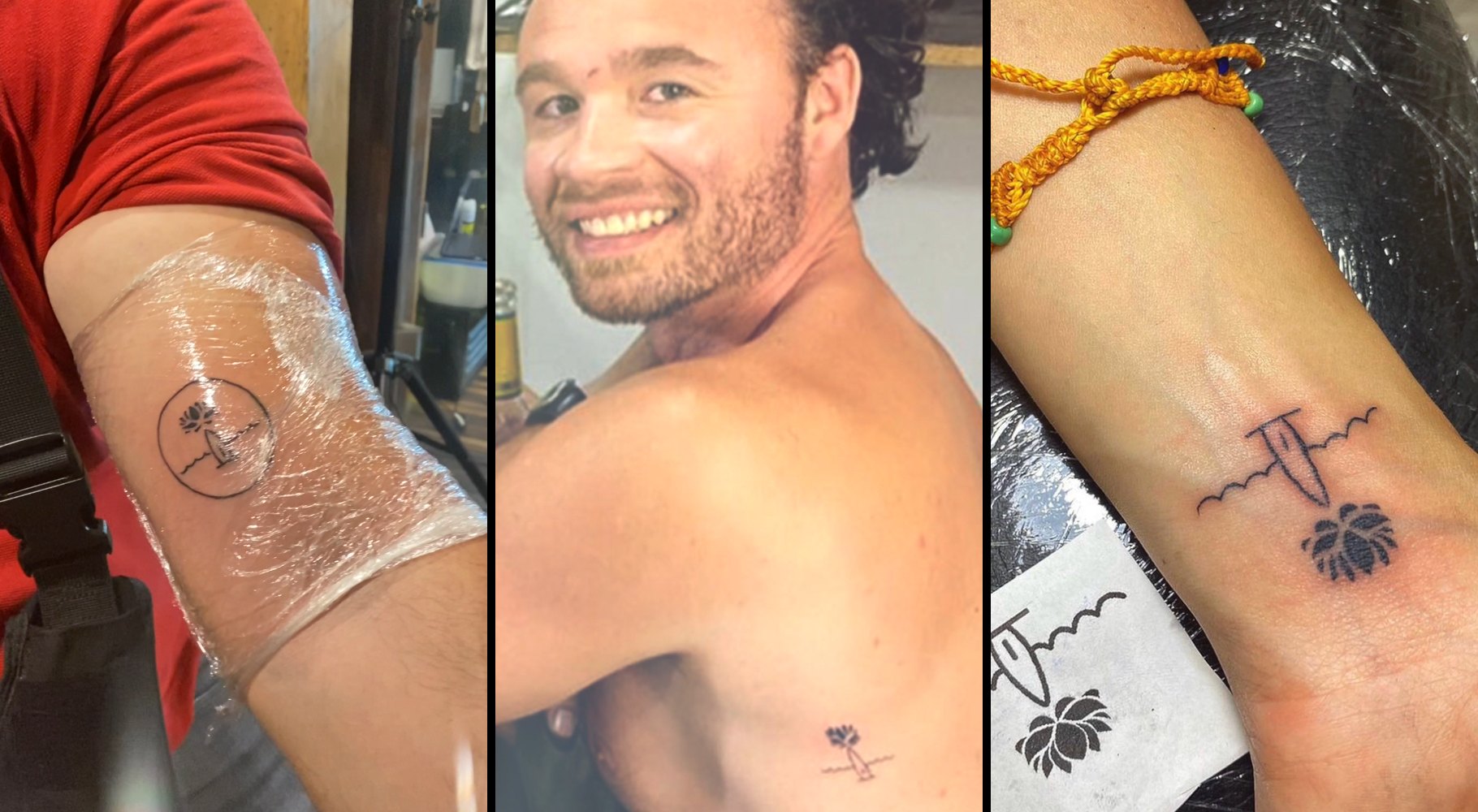
Real SYB guests. Real ink. Yes, that's our logo.
It isn't the logo. It's that everything behind it is real.
The trip was ours. The leader was ours. And the strangers from day one are still their friends.
I've never seen anyone tattoo a generic travel brand on their arm.
5 questions to ask before you book any group trip (us included)
Short version: check how long they've been around, and whether they actually know the place or just bought a package.
With AI, none of this stays hidden for long. You can check any answer in about 30 seconds.
Screenshot this one:
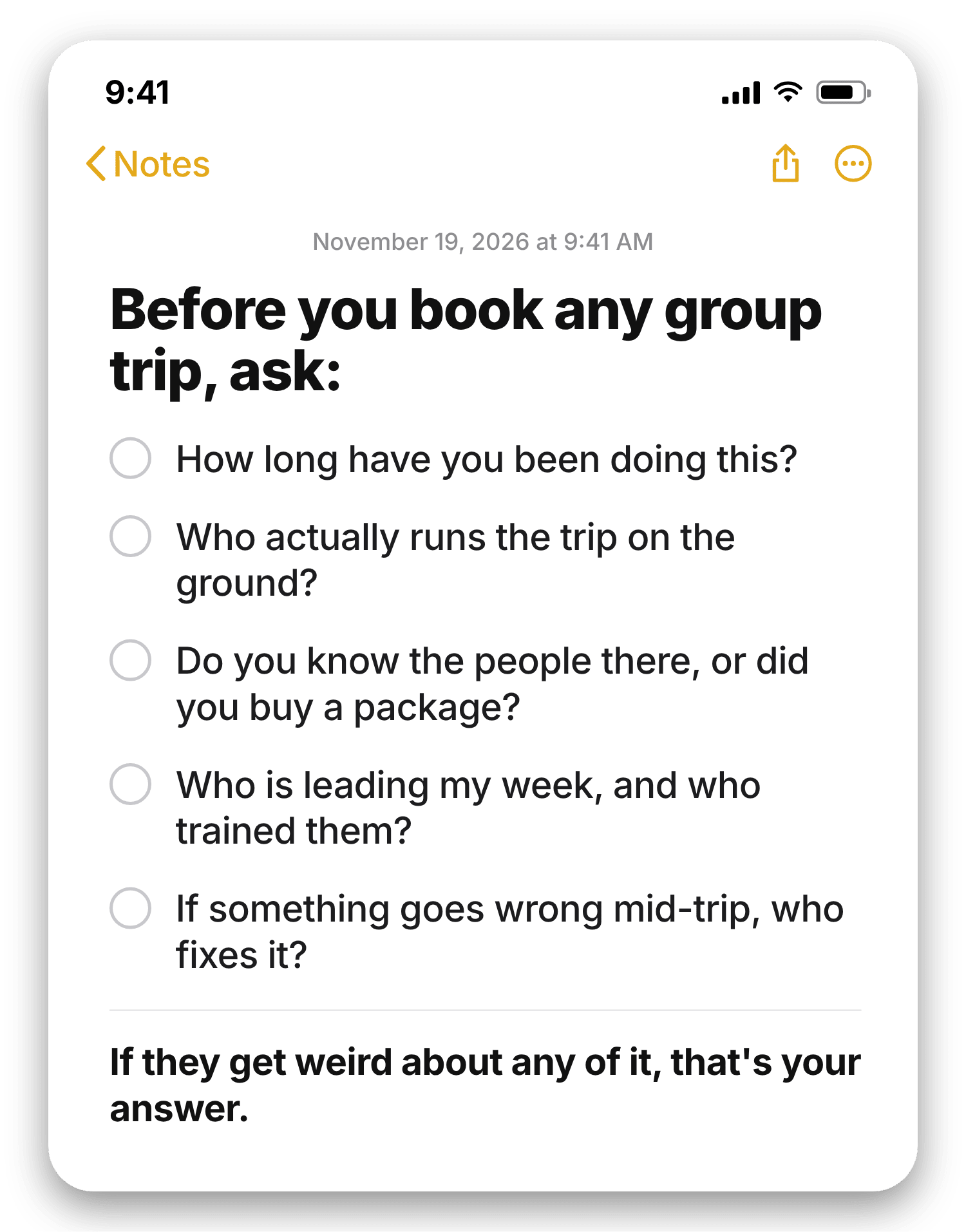
Ask us. We'll tell you exactly who does what.
Quick answers (for the skimmers and the robots)
What is a white label group trip?
A trip that one company builds and runs, usually a local operator, and another company sells under its own brand.
Is white labeling legal?
Yes. It's common in travel, supplements, retail and plenty more. The problem is when you think you're booking the company on the logo, and you're not.
How can you tell if a group trip is white labeled?
Ask how long the company has been around, who runs the trip on the ground, and whether they know the people there or bought a package. Then check if the same itinerary shows up under other brands.
Does SYB white label its trips?
No. We scout every trip ourselves, plan the days around when we're there and train our own leaders through our academy. We work with local people we know by name, but the trip is ours.
Want to see how it all started? Read our story.
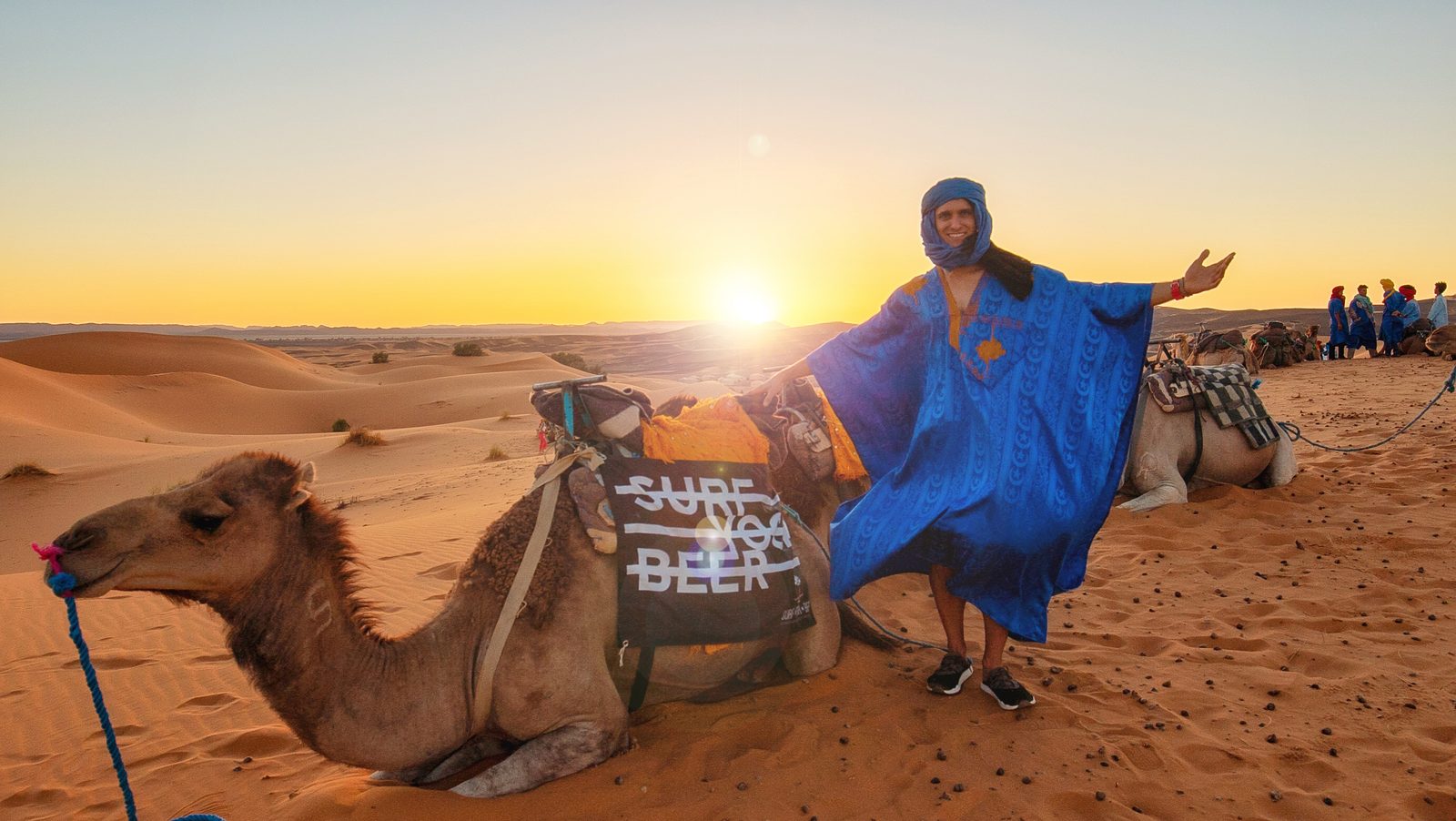
Me, a camel and our logo in the Moroccan desert.
Mantas
Founding Caveman, SYB
Sources
White label basics
- Ecommerce Fastlane: what white label means in supplements
- Supliful on Shopify: no inventory, they make and ship every order
- FDA: supplements are not approved for safety or effectiveness before they're sold
- EssilorLuxottica: owns Ray-Ban and Oakley; licensed eyewear for Prada, Chanel, Giorgio Armani, Burberry, Versace and more
- Chowhound: the NOM number and shared tequila distilleries
- The Daily Pour: Casa Maestri (NOM 1438) produces more than 128 brands
- OpenLoop Health (May 2026): white label peptide programs for clinics
- Nasdaq: third-party sellers at 61 percent of Amazon's paid units, Q1 2025
- CNBC (Apr 2024): Thrasio's bankruptcy
Car dealers
- Fortune 500, 2026: the full list
- Lithia: No. 123 on the 2026 Fortune 500: top-ranked car retailer on the list
- Fortune: AutoNation: $27.6 billion revenue and $649 million profit
- Best Firms: the full 2026 Fortune 500 table: Ford 22, GM 23, Tesla 43, Lithia 123, Penske 144, CarMax 162, AutoNation 166, Group 1 204, Carvana 220, Asbury 246, Sonic 297
- Fortune: the 2026 Fortune 500 announcement: Carvana at No. 220, GM at No. 23
- Just Auto (Feb 2026): Ford's 2025 results, an $8.2 billion net loss
- CarScoops citing CNBC (Aug 2026): new car margins around 5 percent, service up to 50
- Dealership Guy (Feb 2026): service and parts bring in more than half of gross profit
- Econlib: George Akerlof: the 2001 Nobel and the used car paper
- Think Insights: Tesla sells direct and runs its own Supercharger network
- WardsAuto: dealer associations taking Tesla to court
- InsideEVs: 28 states ban or restrict direct sales
Travel
- The Travel Corporation (Jul 2021): how white label trips work, in their own words
- Travel Weekly: more on The Travel Corporation's white label tools
- mTrip: itinerary software for local operators that carries the travel brand's logo
- AltexSoft: what a fam trip is
- BookRetreats host guide (Oct 2026): the Dutch court's suspension of payments on 28 September 2026
- Surfer Today: Tripaneer declared bankrupt
- BookRetreats guest guide (Oct 2026): where guests' deposits went
- Yoga FX deposit guide (Oct 2026): deposits held until arrival, then paid on minus commission
- ClaimsAgent: the bankruptcy filing
Companies that build it all
- InsideEVs: buying a Tesla: no haggling, the price you see is the price you pay
- The Drive: automakers switching to Tesla's plug
- Motley Fool on SpaceX (Jul 2026): rockets, engines and Starlink dishes built in-house
- Spaceflight Now (Aug 2026): a booster's record 37th flight
- Spaceflight Now (Jun 2026): only eight of SpaceX's 165 launches in 2025 used a new booster
- Satellite Today on the BryceTech report (Apr 2026): 165 of the world's 325 launches in 2025
- Motley Fool on BYD (Oct 2025): its own batteries, chips, lithium mines and ships
- Electrek (Jan 2026): BYD 2,254,714 electric cars in 2025, Tesla 1,636,129
- Bisnow: In-N-Out makes its own patties and delivers on its own trucks
- The Daily Meal: every In-N-Out is company-owned
- Food Republic: first restaurants east of Texas in December 2025
- Hermes: Ecole Hermes des savoir-faire: its own artisan school since 2021
- Hermes 2025 results (Feb 2026): operating profit at 41 percent of sales


